
The Art of the Fire: An Ancient Alchemy
San Ildefonso pottery is not manufactured; it is birthed from the earth. Explore the painstaking, multi-month process of creation that transforms raw clay into the world's most sought-after ceramic art.
A Covenant With the Clay
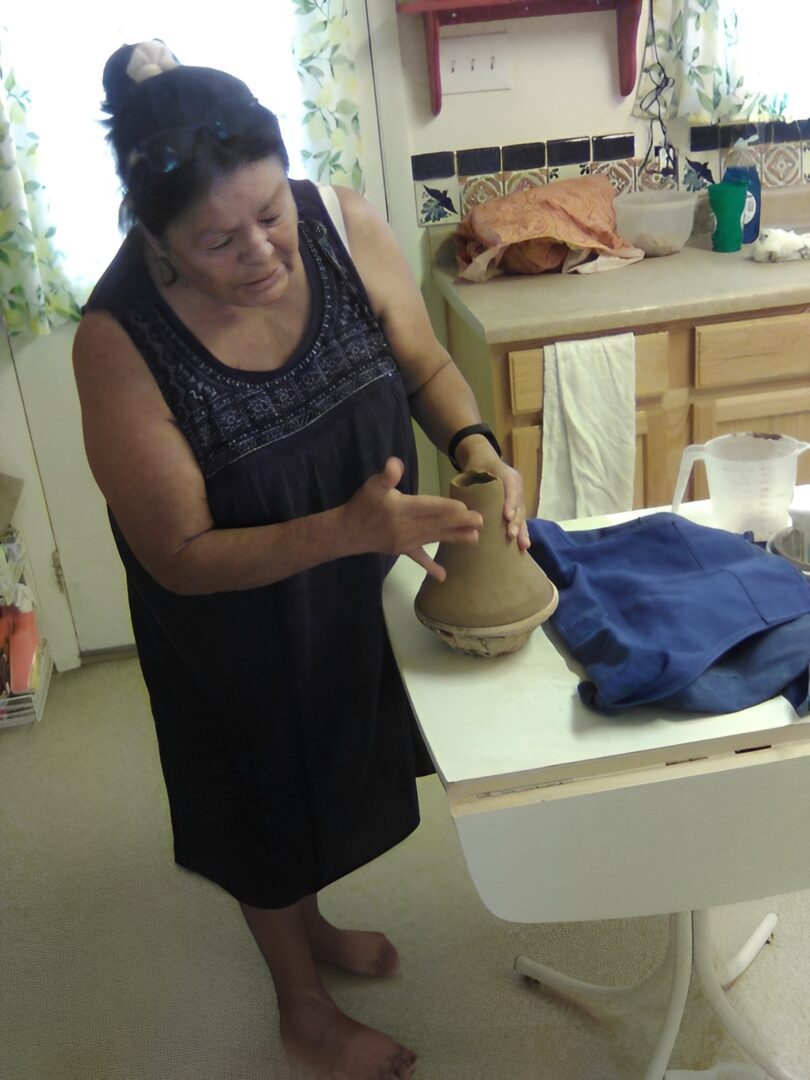
The process begins long before the studio. Master potters travel to ancestral clay pits, where a sacred offering of blue cornmeal is scattered. This act of gratitude ensures the clay will be strong and the spirit of the earth will remain within the vessel. The raw red clay is then mixed with volcanic "blue sand" to act as a binder—a ratio judged entirely by touch and passed down through generations.
Shaped by Hand, Smoothed by Stone
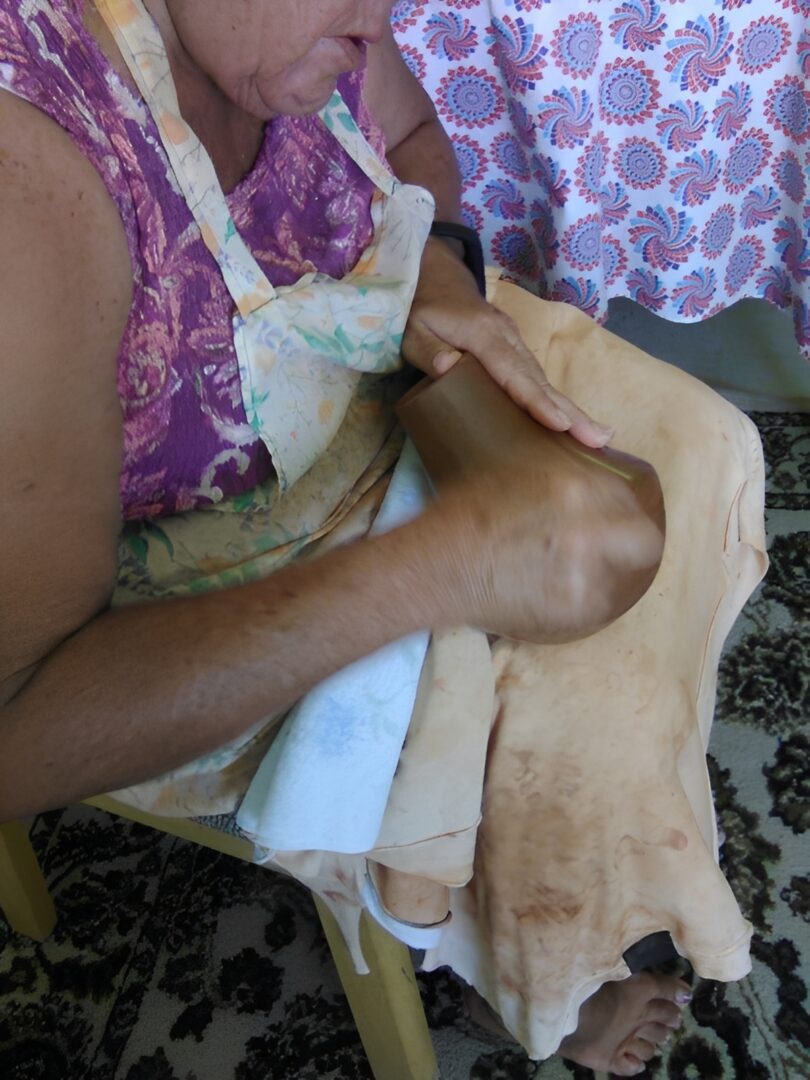
There are no potter's wheels in our tradition. Every piece is built using the hand-coil method, building the walls of the vessel rope by rope. Once shaped, the piece is air-dried and then "slipped" with a liquid clay coating. The signature mirror-like finish is achieved by hand-polishing the wet slip for hours with a smooth river stone. These stones are often family heirlooms, worn perfectly smooth by decades of use by the potter's ancestors.
Precision of the Wild Yucca
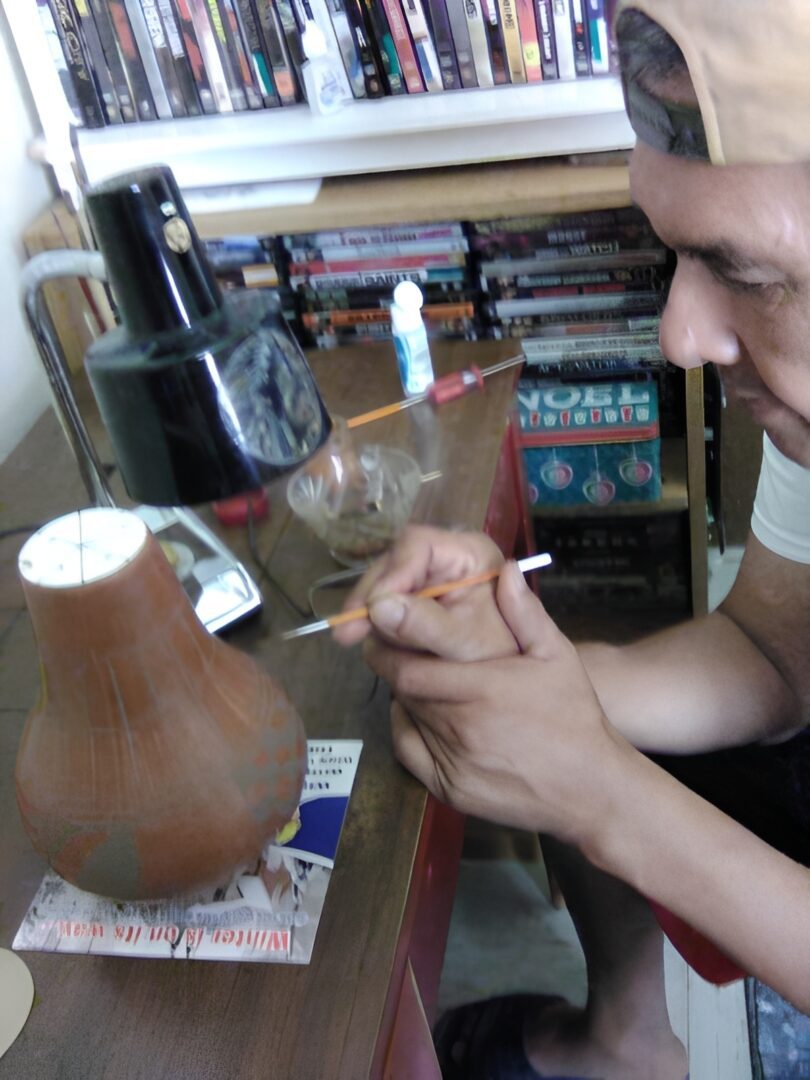
The intricate matte designs seen on Black-on-Black pottery are applied using brushes handmade from the fibers of the yucca plant. The potter chews the end of a yucca leaf until only the fine, resilient fibers remain. With a steady hand and zero margin for error, they apply a "matte" clay slip over the polished surface, creating the iconic contrast that defines the San Ildefonso style.
The Transformation in Smoke
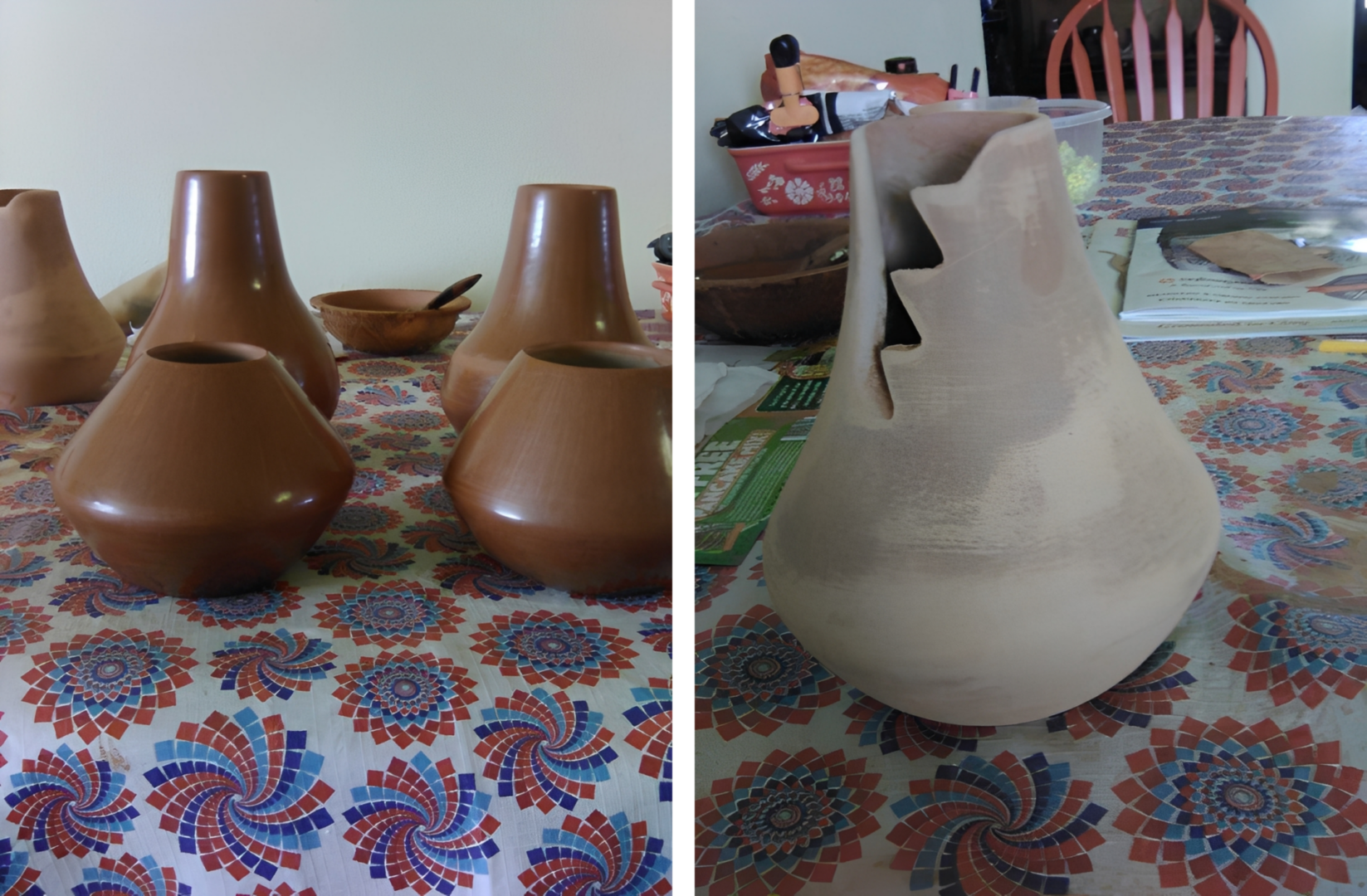
The most critical stage is the outdoor firing. Using cedar wood and dried cow chips, the pottery is heated to nearly 1,400 degrees Fahrenheit. To achieve the deep black color, the fire is suddenly smothered with dried manure, trapping the carbon-rich smoke. This reduction process forces the carbon into the clay, turning the red vessel into a permanent, metallic black. A single shift in the wind or a rogue flame can shatter months of work in an instant—making every successful piece a miracle of timing and experience.
Transition to Collection